

Portfolio

My writing refuses to fit a single genre and I regard the categories below as anything but strictly defined. Whether at the bench or on the page, the spirit behind my work has always been one of experimentation and curiosity.

Science Writing

Kavli Institute for Systems Neuroscience Annual Reports

Science Blogging Samples

Featured science blogging pieces covering neuroscience research, scientific controversies, and institutional profiles.

Navigating Through Space with May-Britt Moser

Navigating Through Space with May-Britt Moser

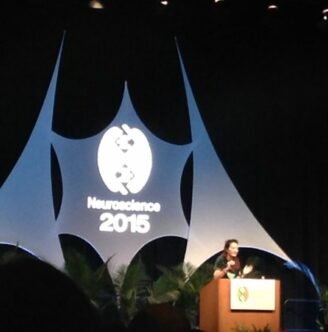
"Wow, nice to see you all," she said peering out from the bright lights of her stage, smiling at the crowd of over 29,000 conference attendees. These were the first words Dr. May-Britt Moser spoke when she took the stage for SFN's 2015 Presidential lecture last Tuesday. It was really nice to see her too, of course, and though we were weary from 5 days of conferencing, the room was full of anticipation.

Retrospectively, a few key phrases immediately come to mind when thinking about the wealth of data she shared: Flintstone. Rats. Rats riding cars. Grids. Speed. Pedunculopontine tegmental nucleus of the mesencephalic locomotor region. Right. Let's not get ahead of ourselves. I'd like to actually go through the (old and new) data she presented, but first

[read full blog post here]
The Behavioral Health Center of Excellence at UC Davis

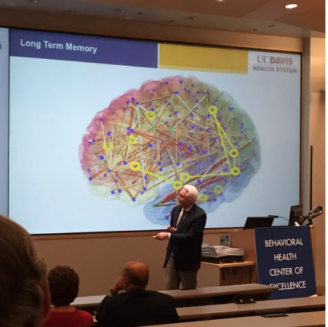
The Behavioral Health Center of Excellence at UC Davis Puts its Neuroscience Tools to Good Use

These days it seems that neuroscience and its fancy new tools are in the news — a lot. Coming off the heels of Obama's BRAIN Initiative announcement in April 2013, this attention is entirely unsurprising and timely. From the extensively covered optogenetics, to the controversial and non-invasive method of transcranial direct stimulation (tDCS), to the science-fiction like promise of CLARITY (a 3D visualization technique of intact rodent brains), it seems that neuroscientists are unstoppable. With these technologies in hand, the relevant question has become: how do we most effectively implement these tools to answer the most pressing research questions of our society today?

[read full blog post here]

Can You...Plagiarize Yourself?

Can You...Plagiarize Yourself?

His name is Jonah Lehrer. He is thirty years old – and he's somewhat of a celebrity in the world of science writing. As former undergraduate researcher in Eric Kandel's lab at Columbia University, he began first researching and reading – then writing about science. His blog The Frontal Cortex quickly gained popularity and it was only a matter of time before it grew to be a regular section at the popular science magazine Wired. You may have also heard him on the radio, as he is a regular contributor to the well-known science show: WNYC – RadioLab. In addition to blogging, he has three published books to his name (his most recent one entitled "Imagine: How Creativity Works") and to top off his list of achievements, he was recently hired as a staff writer for The New Yorker (yes, THE New Yorker). At the rate he's going, it seems there is nothing that can stand in the way of this young, ambitious science writer.

[read full blog post here]

Contributing Writer

AWIS

Association of Women in Science

Washington Wire

Science & Health Section

Maze Engineers

Scientific Research Content

Creative Writing

Creative nonfiction and literary pieces exploring themes of science, medicine, and human experience.